Key takeaways
A working small business stack in 2026 is six tools, not sixteen: CRM, accounting, project management, email and marketing, helpdesk, and payments.
HubSpot Starter, QuickBooks Online, Linear or Notion, Brevo or Mailchimp, Intercom or Help Scout, and Stripe cover most under-50-person teams.
Pick tools that share an API before you pick on features. Integration debt costs more than license fees.
Build custom only when an off-the-shelf tool blocks your workflow, not because it lacks one button.
Budget $150 to $600 per seat per month for a connected stack, before payment processing fees.
The job of business software is to cut five steps out of every workflow that used to take ten. In 2026 the choice is wider than ever, which makes the decision harder. So this post is an opinionated pick list with real prices and trade-offs from hundreds of SaaS and business software builds.

A small business team using a connected B2B software stack on laptops and a wall display, top of post hero image
How to think about a small business software stack in 2026
The biggest mistake small teams make is buying a tool per problem instead of a stack per workflow. You end up with a CRM that does not talk to invoicing, a helpdesk that cannot see customer history, and a project tool nobody opens. Then you pay $200 a month for Zapier to glue it together.
Pick the stack as a stack. Questions we ask before recommending any tool: does it have a real API and webhooks, does it export your data cleanly, does the per-seat price hold up at 25 users, is the vendor likely to exist in three years? See how we evaluate the buy versus build CRM question when weighing custom against off-the-shelf SaaS. A $99 plan the team uses daily beats a $19 plan nobody opens. Our services overview covers where custom work fits alongside SaaS.
CRM: HubSpot, Pipedrive, or Close
If you only buy one piece of software, buy a CRM. It is the only system that remembers every customer conversation across every person on your team.
HubSpot is the default. The free CRM works for two-to-five-person teams. Starter Sales Hub at about $20 per seat per month adds task automation, sequences, and basic reporting. The upsell trap is Professional at $100 per seat, which adds workflows most teams do not need. HubSpot's pricing page is the source of truth.
Pipedrive is better for outbound teams where the pipeline is the central artifact: $14 to $49 per seat per month with a hard-to-beat deal board. Reporting is weaker, marketing automation is thin. Close is the niche pick for outbound SaaS teams living on the phone: built-in dialer, recording, SMS, and sequences for $59 to $149 per seat. Teams that outgrow these (custom pricing logic, regulated sales, 100+ seats) sometimes need a custom CRM when integration costs exceed the build cost.
Accounting: QuickBooks Online or Xero
Pick QuickBooks Online if you are US-based, Xero if you are anywhere else. That is the entire decision tree for 95 percent of small businesses.
QuickBooks Online is the US default because every bookkeeper and tax preparer in North America knows it. Plans run from $35 per month for Simple Start to $235 for Advanced. Plus at $99 covers most businesses with inventory or project tracking. Intuit's pricing page has current numbers. Xero is the international option: cleaner interface, stronger multi-currency, $20 to $80 per month. Both integrate with Stripe, HubSpot, Shopify, and most payroll providers. For teams in fintech, you may need to layer custom reporting on top.
Project management: Linear, Notion, Asana, or ClickUp
The most overcrowded category in software.
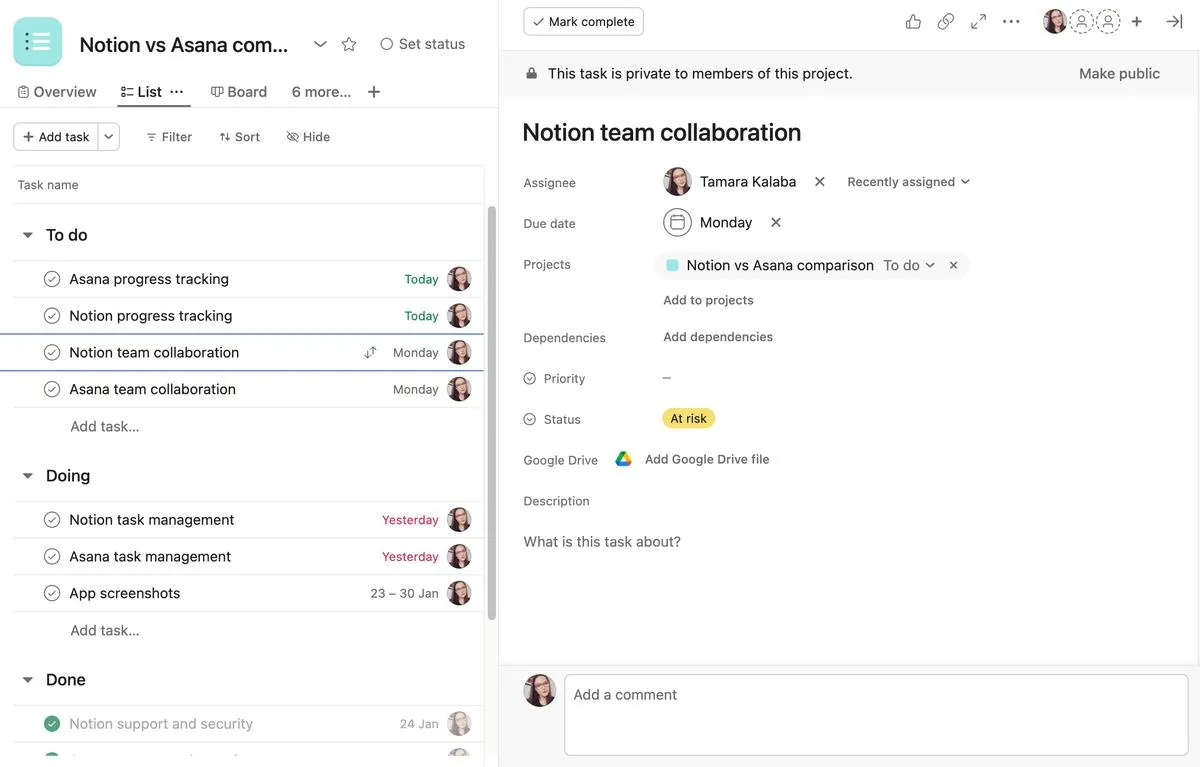
A project management board comparison between Linear, Notion, and Asana on a single screen, illustration for project management section
Linear is right for engineering and product teams. Fast, opinionated, built around cycles and issues. $8 to $14 per seat per month, cheap relative to Jira. Most of our website development and mobile app development projects run in Linear with a shared Notion workspace for specs.
Notion works for non-engineering teams (marketing, ops, content, HR). Generous free tier, $10 to $18 per seat per month paid. The flexibility is the selling point and the trap, without templates on day one Notion becomes a graveyard of half-built pages. Asana is the middle ground for cross-functional teams tracking projects with deadlines and dependencies ($11 to $25 per seat). ClickUp is the kitchen-sink option at $7 to $19 per seat: tasks, docs, goals, time tracking, chat in one product. The risk is you replace five focused tools with one that does five things adequately.
For most small businesses the answer is two tools: Linear or Asana for execution, Notion or Confluence for documentation.
Email and marketing: Brevo, Mailchimp, ConvertKit, or HubSpot
Email is the highest-ROI marketing channel for most small businesses. Pick a tool that handles transactional and marketing email together.
Brevo (formerly Sendinblue) is the pricing winner: 300 emails per day free, paid from $9 per month for 5,000 emails, with SMS and WhatsApp from the same dashboard. Our digital marketing team often pairs Brevo with HubSpot when clients want marketing automation separate from CRM. Mailchimp is the default most teams already have: free under 500 contacts, $13 to $350 per month after. Pricing scales fast. ConvertKit (now Kit) is for creators and newsletter-led businesses, free up to 10,000 subscribers if you skip automations. HubSpot Marketing Hub Starter at $20 makes sense if you are already on HubSpot. Professional at $890 is overkill for most small businesses.
Helpdesk: Intercom, Help Scout, Zendesk, or Front
Support tools split into chat-led (Intercom, Drift) and email-led (Help Scout, Front). Pick based on where your customers reach you.

A helpdesk dashboard showing tickets, AI suggestions, and customer history, illustration for helpdesk section
Intercom leads on chat and AI-assisted support. Their Fin AI agent resolves a real share of tickets without a human. Base plans $39 per seat per month, Fin billed per resolution, often cheaper than a third support rep. Good for SaaS, ecommerce, and high ticket volume. Help Scout is the email-first alternative: cleaner UI, $25 per user per month. Zendesk is the enterprise default small businesses do not need until they hit about 20 agents ($55 to $115 per seat). Front is for teams handling shared inboxes (sales@, hello@) and collaborating inside email rather than ticket queues, $19 to $99 per seat.
Payments: Stripe, then everything else
Pick Stripe unless you have a specific reason not to. The API is the cleanest in the industry and almost every SaaS tool integrates natively. 2026 pricing sits at 2.9 percent plus 30 cents per US online card transaction. The Stripe pricing page is straightforward.
The exceptions are narrow. Square is better for in-person payments and POS (see our restaurant POS guide). PayPal is still required for some international B2B customers. Adyen wins above $50 million in annual volume. For subscriptions Stripe Billing handles recurring revenue, for marketplaces Stripe Connect handles split payments. If your model needs custom tax rules, complex revenue share, or unusual payment terms, our web application development team builds a thin layer on top of Stripe instead of replacing it.
Communication: Slack or Microsoft Teams
If you run on Microsoft 365, use Teams (it is included). If you run on Google Workspace, use Slack ($7.25 to $15 per user per month). The real cost of Slack is the focus time a noisy workspace eats. For remote teams this matters more, see our note on hiring developers in Malta.
The connected stack: a 2026 comparison table
Here is what a typical small business stack looks like across three sizes. Prices are rounded May 2026 estimates for a US-based team, excluding payment processing fees. For custom integration and build costs on top, see our pricing page.
Category | 5-person startup | 15-person SMB | 40-person SMB |
|---|---|---|---|
CRM | HubSpot Free | HubSpot Starter ($20/seat) | HubSpot Professional or Pipedrive Pro |
Accounting | QuickBooks Simple Start ($35/mo) | QuickBooks Plus ($99/mo) | QuickBooks Advanced ($235/mo) |
Project mgmt | Notion Free or Linear ($8/seat) | Linear + Notion ($18/seat combined) | Linear + Notion or Asana Business |
Email and marketing | Brevo Free or Mailchimp Free | Brevo Business ($65/mo) or Mailchimp Standard | HubSpot Marketing Pro or Brevo Enterprise |
Helpdesk | Help Scout Standard ($25/seat) or Gmail | Help Scout Plus ($50/seat) or Intercom Essential | Intercom Advanced + Fin AI |
Payments | Stripe standard rates | Stripe standard rates | Stripe + custom billing logic |
Communication | Slack Free | Slack Pro ($7.25/seat) | Slack Business+ ($12.50/seat) |
Approximate monthly software spend | $50 to $200 | $800 to $1,800 | $3,500 to $7,000+ |
Numbers shift if you skew toward one category. Sales-first teams spend more on CRM and dialers. Support-first teams spend more on Intercom. Creators skip CRM and double down on email. The point is the shape, not the line items.
When custom software beats SaaS
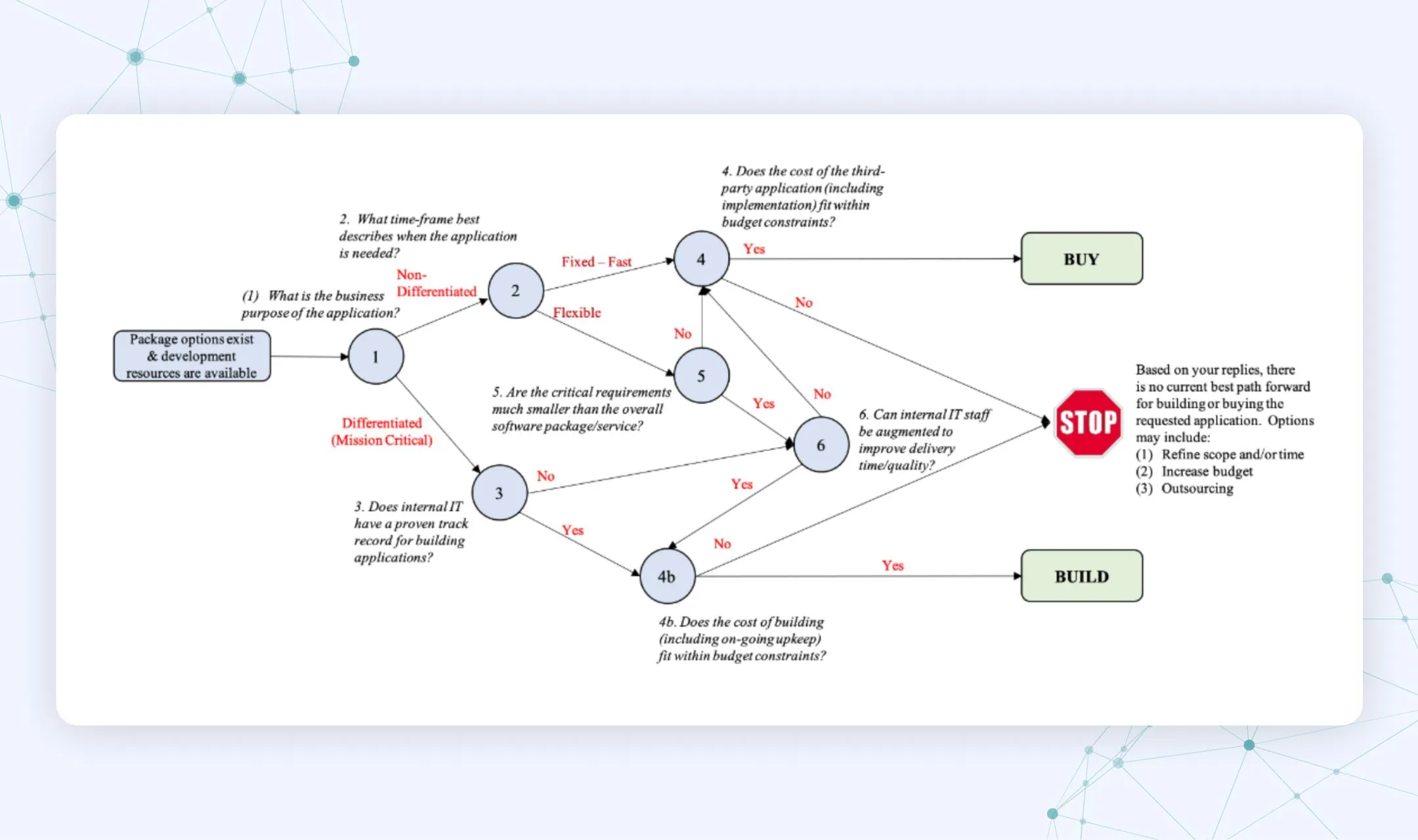
A decision diagram showing when to choose custom software versus SaaS for small business workflows
The default for almost every small business should be SaaS. The honest threshold for custom is one of three triggers:
Workflow lock: no SaaS tool models your process correctly and the workaround costs more than a build (common in legal, healthcare, fintech).
License math: per-seat SaaS pricing means custom amortises in under three years, usually around 100 to 200 seats.
Differentiated capability: the software is part of your moat. Marketplaces, vertical SaaS, AI-native products.
If you hit a trigger, we cover the build decision in our custom vs off-the-shelf billing for law firms and a deeper write-up on case management software for law firms.
What to skip in 2026
Categories where small businesses waste money. Standalone analytics: under 25 people, HubSpot, Stripe, Google Analytics, and your accounting tool cover 90 percent of what you need. Dedicated meeting tools: Calendly or Cal.com free is enough. Proposal tools: ship proposals in Google Docs or a HubSpot template until you have ten deals a month in active negotiation. Workflow automation: teams pay $500 a month on Zapier for workflows a 30-minute custom build in a web application would have eliminated.
How to roll out a new tool without burning the week
Adoption is where most software money is wasted. Pick one tool at a time, not three. Migrate data before going live. Train in the workflow ("here is how we close a deal from first email to signed contract") not the feature list. Kill the old tool on a hard cutover date or half the team will keep using it for months. For heavier rollouts and custom integrations between SaaS tools, our staff augmentation team embeds engineers alongside yours.
Key takeaways
The 2026 small business B2B stack covers six categories: CRM, accounting, project management, email and marketing, helpdesk, and payments.
HubSpot, QuickBooks, Linear or Notion, Brevo or Mailchimp, Intercom or Help Scout, and Stripe cover most teams under 50 people.
Budget $150 to $600 per seat per month, before payment processing.
Build custom only when workflow lock, license math, or differentiated capability forces it.
FAQ
What is the minimum B2B software stack for a 5-person startup?
A free CRM (HubSpot or Pipedrive trial), QuickBooks Simple Start, Notion or Linear for projects, Brevo or Mailchimp free tier for email, Help Scout or shared Gmail for support, and Stripe for payments. Monthly software cost lands between $50 and $200 plus processing fees.
Is HubSpot worth it for small businesses in 2026?
HubSpot Free and Starter (around $20 per seat per month) are worth it for most small B2B businesses. The integrated CRM, email tracking, and lead capture remove the need for several separate tools. Professional is usually overkill for teams under 25 people.
QuickBooks Online or Xero for a US-based small business?
QuickBooks Online is the safer US pick because nearly every accountant knows it. You pay less in setup and year-end handoff time. Xero is excellent technically and cheaper at lower tiers, but in the US it means finding a Xero-fluent accountant. Outside the US, Xero is usually better.
What is the cheapest reliable payment processor for a small business?
Stripe at standard rates (2.9 percent plus 30 cents per US online transaction) is the practical floor: no monthly fees, clean APIs. Square is comparable for in-person payments. PayPal is more expensive but sometimes required by international B2B customers. Rates only drop above roughly $1 million in annual volume.
Do I need a separate helpdesk tool if I use Gmail?
Under three people on support and under 50 tickets a week, shared Gmail works. Once you have multiple agents, repeat tickets, or SLAs, switch to Help Scout, Front, or Intercom. The tipping point is when tickets close without context or two agents reply to the same email.
How much should a 20-person small business spend on software per month?
Roughly $2,000 to $5,000 per month for a connected B2B stack, depending on how marketing- and sales-heavy the team is. CRM and marketing tools take the largest share. Audit annually and cut tools nobody opens.
Ready to scope your small business software stack?
Picking the tools is half the battle. Wiring them together so they share data and report cleanly is the other half. If you want help picking, integrating, or custom-building the parts SaaS cannot solve, talk to our team or review our pricing options. We can also walk you through the buy versus build CRM decision.
Tags
About the Author

Daniel Brooks
Daniel covers web development, artificial intelligence, product design, and the technology decisions that help modern businesses grow.