Claude Opus 4.8 is Anthropic's newest flagship model, released on May 28, 2026. It is built for coding, agents, and knowledge work, with a sharp focus on honesty: it is far less likely to let flawed code slip through and more willing to flag its own uncertainty. Pricing stays the same as the previous version.
TL;DR
Claude Opus 4.8 launched May 28, 2026 as Anthropic's top-tier model, with the API model ID
claude-opus-4-8.The headline upgrade is reliability: Anthropic says it is roughly four times less likely than the previous version to let code flaws pass unnoticed.
It leads most of Anthropic's published benchmarks against GPT-5.5 and Gemini 3.1 Pro, while GPT-5.5 still wins on terminal and command-line tasks.
Pricing is unchanged at $5 per million input tokens and $25 per million output tokens, so upgrading is close to a one-line model swap.
It ships with a 1M-token context window, stronger tool use, and new features like dynamic workflows and effort control.
What is Claude Opus 4.8?
Claude Opus 4.8 is the most capable model in Anthropic's Claude family, aimed at complex coding, autonomous agents, and document-heavy knowledge work. Released on May 28, 2026, it improves code reliability and tool use over Opus 4.7 while keeping the same price. It runs on the Claude API and major cloud platforms.
If you are weighing AI for a product or an internal process, this is the model most teams will reach for when accuracy matters more than raw speed. Our team at Brandrums' AI solutions practice has been testing it on real client workloads, and the short version is that it behaves like a careful senior engineer rather than an eager intern.
What's new in Claude Opus 4.8
Bar chart comparing Claude Opus 4.8 benchmark scores against Opus 4.7, GPT
Anthropic describes Opus 4.8 as a modest but tangible improvement over its predecessor, not a giant leap. The real story is consistency and trustworthiness, which matters more than a flashy demo when you are shipping to customers. Here are the confirmed Claude Opus 4.8 features worth knowing.
More honest output. Anthropic reports the model is about four times less likely than Opus 4.7 to let flaws in its own code pass unremarked, and it flags uncertainty more readily. You can read the full breakdown in the official Anthropic announcement.
Dynamic workflows. In Claude Code, the model can plan a task, spin up many parallel subagents in one session, and verify outputs before reporting back. Anthropic cites code migrations spanning hundreds of thousands of lines from kickoff to merge.
Effort control. You can now choose how much effort the model spends, from low to maximum, so you can trade cost and speed against depth on a per-task basis.
Mid-conversation system messages. Developers can update instructions partway through a conversation without breaking the prompt cache, which is handy for long-running enterprise AI agents.
Faster, cheaper fast mode. The optional fast mode delivers higher output speed and is roughly three times cheaper than the previous generation's fast mode.
Independent reviewers covered the launch widely. TechCrunch's coverage of the dynamic workflow tool is a useful outside read if you want a second opinion before committing engineering time.
Claude Opus 4.8 vs previous models and other frontier LLMs
The Claude Opus 4.8 vs GPT question comes up in almost every client call, so here is a fair split. Opus 4.8 wins on issue-level coding, knowledge work, and computer use. GPT-5.5 still leads on terminal and command-line workflows. Neither is universally better, which is exactly why we recommend matching the model to the job rather than picking a favorite. If you want help running that evaluation, our full service lineup covers it end to end.
The numbers below come from Anthropic's own published evaluations. Treat them as vendor-reported until independent labs replicate them.
Benchmark | Claude Opus 4.8 | Claude Opus 4.7 | GPT-5.5 | Gemini 3.1 Pro |
|---|---|---|---|---|
SWE-bench Pro (coding) | 69.2% | 64.3% | 58.6% | 54.2% |
SWE-bench Verified | 88.6% | 87.6% | N/A | N/A |
Terminal-Bench 2.1 | 74.6% | 66.1% | 78.2% | N/A |
OSWorld-Verified (computer use) | 83.4% | 82.3% | 78.7% | 76.2% |
Humanity's Last Exam (with tools) | 57.9% | N/A | lower | lower |
VentureBeat summed up the comparison by noting Opus 4.8 beats standard GPT-5.5 across at least a dozen benchmarks in knowledge work, issue-level coding, and long context, while GPT-5.5 keeps the edge on terminal workflows. You can read the VentureBeat analysis of Opus 4.8 for the full list. One practical caveat: Opus 4.8 tends to use more steps than GPT-5.5 to finish the same task, which can raise inference cost.
How Claude Opus 4.8 works under the hood
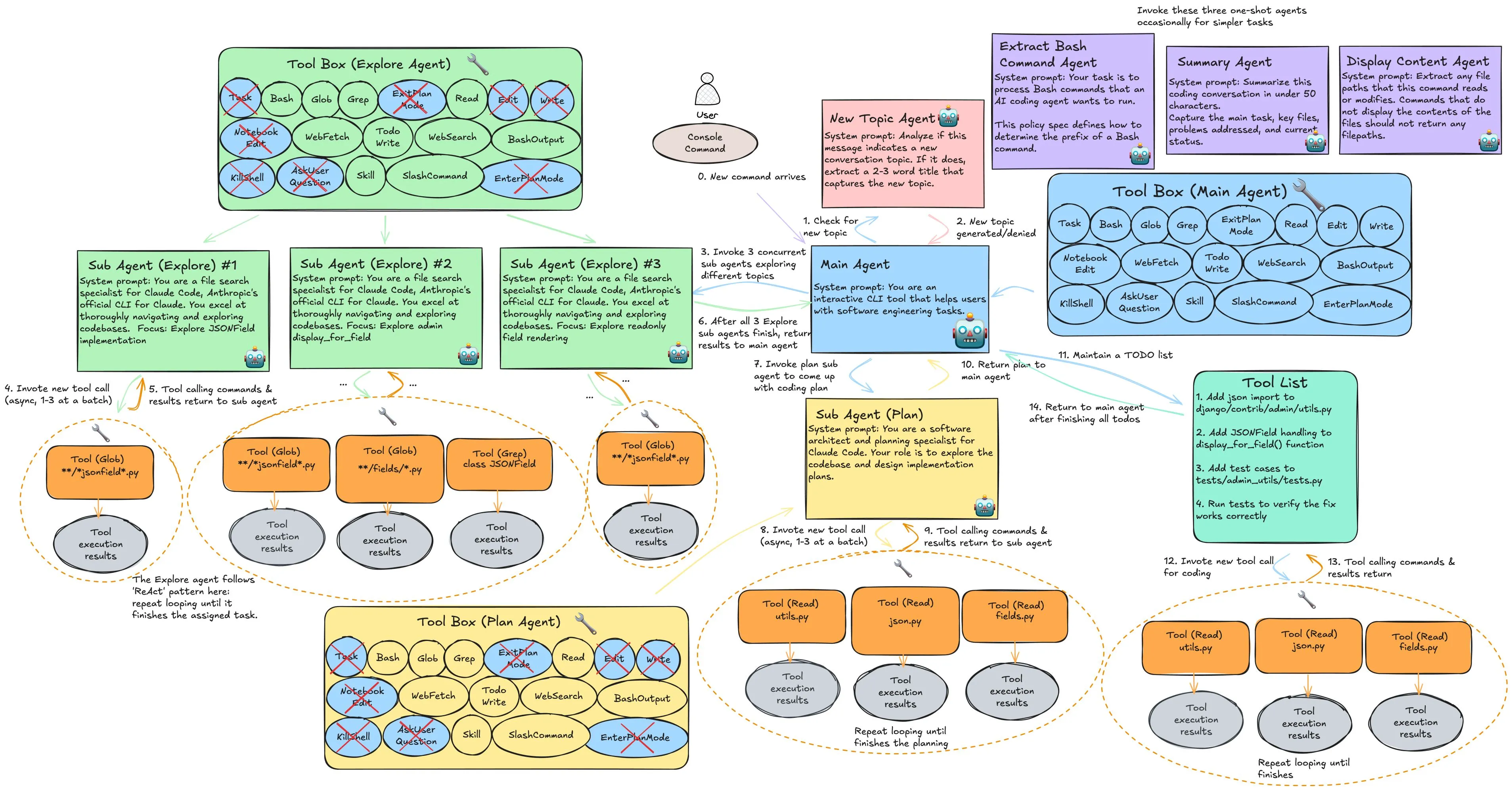
Architecture diagram showing context window, tool use, and agent loop flow for Claude Opus 4.8
You do not need a machine learning degree to use this model well, but a few specs shape how you design around it. The details below are confirmed in Anthropic's official model documentation.
Context window and output
Opus 4.8 reads up to 1M tokens of context by default, which is roughly a small library of documents in one prompt. It can produce up to 128k tokens of output in a single response. That headroom is what makes it practical for analyzing long contracts, large codebases, or full research folders at once.
Reasoning and tool use
The model uses adaptive thinking, deciding how hard to reason based on the task. It also has strong tool use, meaning it can call your functions, search systems, or browse, then act on the results. This is the foundation for agents that do real work instead of just chatting, which is why we lean on it for client builds in our AI industry projects.
Agents
An agent loop is simple in concept: the model requests a tool, your code runs it, you hand back the result, and the loop repeats until the job is done. Opus 4.8 improves how cleanly it triggers and chains those tools, which reduces the wasted steps and dead ends that made earlier agents frustrating to ship.
Real-world use cases for businesses
Grid of business use cases for Claude Opus 4.8 across fintech, healthcare, ecommerce, and education
Here are six Anthropic Claude Opus 4.8 use cases we see working in production, each tied to a specific industry or build. The thread connecting them is AI for business automation that holds up under real customer load.
Fintech document and risk analysis. The large context window lets the model read statements, filings, and policies in one pass to flag risks or summarize positions. This pairs naturally with AI solutions for fintech where accuracy and auditability are non-negotiable.
Healthcare intake and triage support. The improved honesty matters most where mistakes are costly, which makes it a strong fit for AI in healthcare workflows like patient intake summaries and documentation drafts that a clinician reviews.
Ecommerce support and merchandising agents. Agents can answer product questions, process returns logic, and update catalogs. We build these into stores through our ecommerce AI work so they connect to real inventory and orders.
Education tutoring and grading assistants. The model can explain concepts at different levels and draft feedback, which suits AI for education platforms that need patient, consistent explanations at scale.
Real estate listing and lead automation. It can write listings, qualify leads, and answer property questions around the clock, a common request in our real estate technology projects.
Customer-facing chatbots and assistants. Wherever you need a smart assistant on a site or app, the model anchors it. We handle the build through our mobile application development and web teams so the bot ships inside a real product.
How to integrate Claude Opus 4.8 into your product
Integration is straightforward if you have built against any modern API before. The basics, drawn from Anthropic's developer documentation, look like this.
Claude API for business basics. You call the model by its ID,
claude-opus-4-8, send a list of messages, and read the response. Because pricing matches Opus 4.7, upgrading an existing app is often a single line change.Prompt caching. Reused context, like a long system prompt or a knowledge base, can be cached for up to around 90% savings on repeat reads. The minimum cacheable prompt is small, so even short setups qualify.
Agent loops. Keep running tool calls in a loop until the model stops requesting tools. This is how you turn a chat model into a worker that completes multi-step tasks.
Deployment. Opus 4.8 is available on the Claude API, Amazon Bedrock, Google Vertex AI, and Microsoft Foundry, so you can deploy inside whichever cloud your data already lives in.
If your team would rather skip the plumbing, our website development and AI engineers wire the model into your stack, including auth, caching, and monitoring, so you launch with something production-ready rather than a prototype.
Limitations and risks to plan for
No model is magic, and being honest about the gaps is how you avoid an expensive surprise later. Here is what to plan around with Opus 4.8, and where a careful content and prompt strategy earns its keep.
Cost and latency. Opus is premium priced, and higher effort levels burn more tokens. For high-volume, simple tasks, a smaller model is often the smarter choice.
It uses more steps than GPT-5.5. On comparable agent tasks it tends to take more turns, which can add cost even when quality is higher.
Hallucination is reduced, not eliminated. The honesty gains are real, but you still need human review for anything that touches money, health, or legal exposure.
Data handling. Decide where prompts and outputs are processed, especially in regulated industries, and use a cloud deployment that meets your compliance needs.
Vendor-reported benchmarks. Most of the numbers above are Anthropic's own. Press coverage of the launch echoes them, but independent replication was still forming at release, so verify against your own tasks.
How Brandrums helps you ship AI features fast
Knowing what Opus 4.8 can do is one thing. Shipping it inside a product your customers trust is another, and that gap is where most AI projects stall. Our AI development team handles model selection, integration, evaluation, and the unglamorous reliability work that keeps an agent from embarrassing you in front of a customer.
We have done this across real builds, not slide decks. You can see how we approach delivery in our project portfolio, and if you need supporting pieces like a refreshed brand or launch creative, our branding team rounds out the work so your AI feature looks as credible as it performs.
Key takeaways
Claude Opus 4.8 is live as of May 28, 2026 and is Anthropic's most capable model, with the ID
claude-opus-4-8.The biggest win is reliability, with roughly four times fewer unflagged code flaws than Opus 4.7.
It leads most published benchmarks against GPT-5.5 and Gemini 3.1 Pro, but GPT-5.5 still wins terminal and CLI tasks.
Pricing is unchanged at $5 input and $25 output per million tokens, so upgrading is low friction.
The best business fit is high-stakes, accuracy-sensitive work in fintech, healthcare, ecommerce, education, and real estate.
FAQ
What is Claude Opus 4.8?
Claude Opus 4.8 is Anthropic's flagship AI model, released on May 28, 2026. It is built for advanced coding, autonomous agents, and knowledge work, and it emphasizes honesty by flagging uncertainty and catching more of its own code flaws. It runs on the Claude API and major cloud platforms.
How much does Claude Opus 4.8 cost?
Pricing is unchanged from Opus 4.7 at $5 per million input tokens and $25 per million output tokens on the standard tier. Prompt caching can cut repeat costs by up to roughly 90%, and the batch API offers further discounts for non-urgent, high-volume jobs.
How does Claude Opus 4.8 compare to GPT-5.5?
Anthropic's benchmarks show Opus 4.8 leading on issue-level coding, knowledge work, and computer use, while GPT-5.5 wins terminal and command-line workflows. Opus 4.8 also tends to use more steps per task. The right pick depends on your specific workload rather than one universal winner.
What is the context window for Claude Opus 4.8?
Claude Opus 4.8 supports up to a 1M-token context window by default on the Claude API, Amazon Bedrock, and Google Vertex AI. That is enough to process long contracts, large codebases, or full document sets in a single prompt, with up to 128k tokens of output per response.
Can my business integrate Claude Opus 4.8?
Yes. You call the model through the Claude API using the ID claude-opus-4-8, and it is also available on Amazon Bedrock, Google Vertex AI, and Microsoft Foundry. Most teams add prompt caching and an agent loop. Brandrums can handle the full integration if you would rather skip the setup.
Ready to build with Claude Opus 4.8?
If you are exploring AI for your product or operations, the smart move is to start with a focused pilot rather than a sprawling roadmap. Tell us what you are trying to automate and we will scope it honestly, including where a cheaper model would serve you better. Contact our team to map out a build, or review our pricing options to see how an AI feature fits your budget.