TL;DR
- Command Code is a terminal-first AI coding agent from Langbase, Inc. (founder and CEO Ahmad Awais). Its differentiator is "taste": a proprietary taste-1 meta neuro-symbolic model that continuously learns your personal coding style from your accepts, rejects, and edits, then applies it automatically. It installs via
npm i -g command-codeand runs ascmd.- It is a model-agnostic harness, not a model lab: it routes to Anthropic, OpenAI, Google, DeepSeek, Qwen, Kimi, GLM, MiniMax and more, supports bring-your-own-key with no markup, and is priced aggressively (paid plans from $1 a month with $10 in credits, up to $200 a month Ultra; Teams $40 a month; custom Enterprise). It is closed-source and there is no free-forever tier.
- The product is brand new (beta launched around February 2026 with a $5M seed led by Tom Preston-Werner's PWV) and genuinely interesting on paper, but the headline performance numbers ("10x faster," "5x fewer bugs") and growth figures are company-stated and not yet verified by third parties. Independent community coverage is thin. Treat marketing claims as aspirational and pilot before committing.
What Command Code is, and what it is not
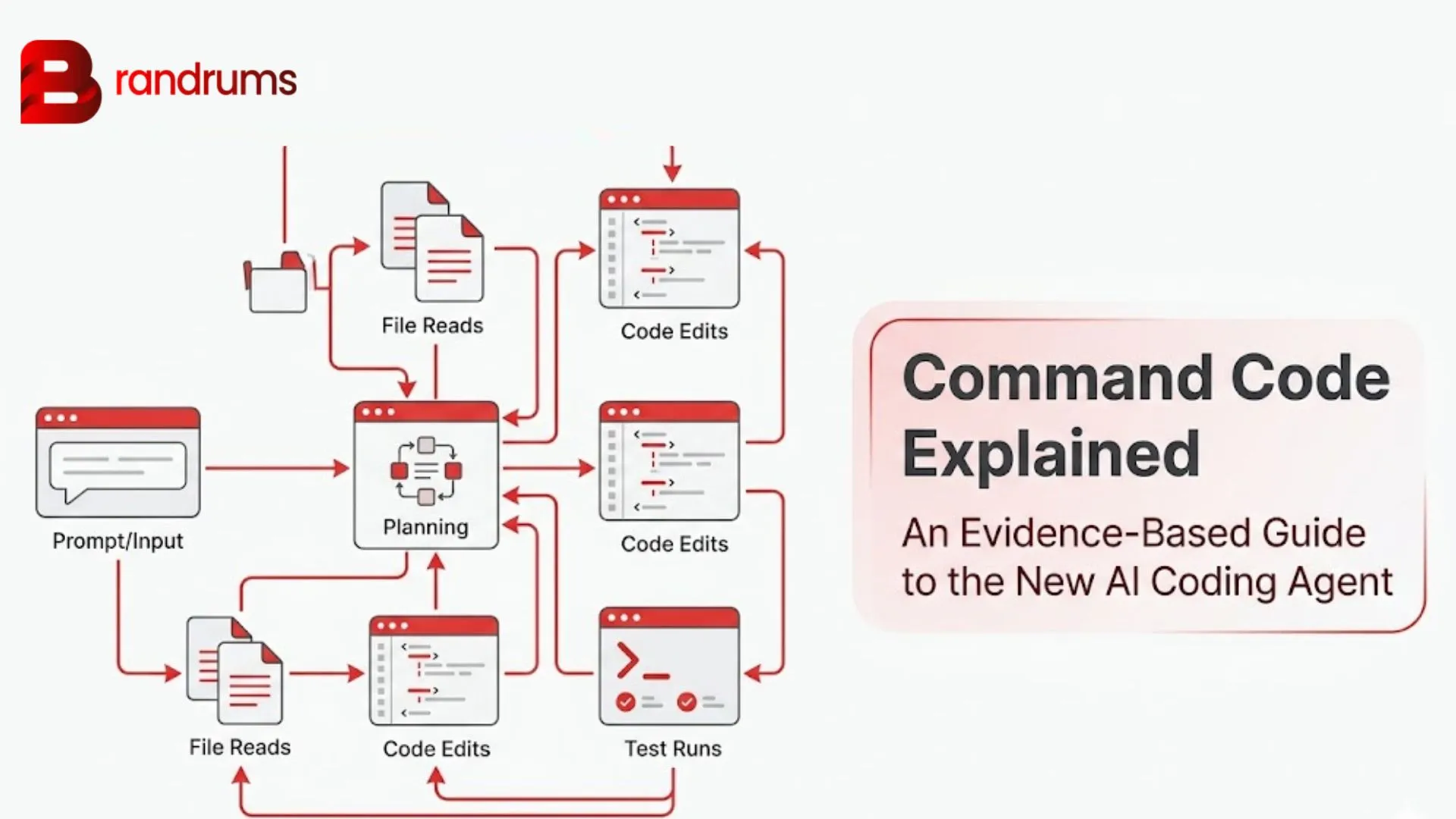
Command Code is, per commandcode.ai, "the first AI coding agent that learns your coding taste." It lives in your terminal and "ships, fixes, tests, and refactors," positioning itself in its own meta description as "a modern alternative to Claude Code, Cursor, OpenCode, and Copilot."
An important disambiguation up front: Command Code is not Anthropic's Claude Code. It is a separate product at the commandcode.ai domain, built by the company formerly known as Langbase. If you are weighing Claude Code specifically, our Claude Code small-team pricing breakdown covers that tool's economics.
The problem statement, from the launch post: "AI-assisted coding has a paradox. The code is usually correct. It's rarely yours." The thesis is that rule files (.cursorrules, CLAUDE.md) and skills are static and decay, whereas behaviour-learned "taste" updates every session.
The core idea: "taste"
The central value proposition is solving what the company calls "AI slop": code that is technically correct but generic and not in your team's voice. Per the taste documentation, Command Code observes every accept, reject, and edit as a signal, then distills these into a human-readable taste profile stored locally in .commandcode/taste/taste.md, plus project-level skills and personal memory.
The company frames "taste" as a layer above rules and skills, arguing in its taste-vs-skills-vs-rules post that "rules decay" and "taste compounds." This is powered by taste-1, which the company describes as a meta neuro-symbolic architecture trained with a reinforcement-learning objective expressed as output = LLM(prompt | taste(user)).
The honest read on this idea: it is genuinely well-articulated, it targets a real pain point that anyone who has lived inside an AI coding tool knows, and it is the most novel framing in the agent space right now. Whether the implementation lives up to the framing is what the pilot is for. We address the same "learned conventions vs static rules" tension on the product side in our audit-ready AI agents guide.
Who built it (founder and funding)
Founder and CEO is Ahmad Awais, a well-known open-source engineer. His public credentials include contributing code to NASA's Ingenuity Mars Helicopter mission in 2021 (NASA noted nearly 12,000 people contributed to the open-source software behind the launch, and Microsoft CEO Satya Nadella featured the contribution at the 2021 Microsoft Inspire keynote, calling it "an awesome example for developers"); a 5x Gold GitHub Stars Award winner (per ahmadawais.com, one of 8 recipients among 100M-plus developers globally and ranked the #1 JavaScript trending developer); ex-VP of DevRel and DevTools at RapidAPI; and creator of the Shades of Purple theme and corona-cli.
The legal entity is Langbase, Inc., based in San Francisco. The about page names founding team members Saqib Ameen, Maedah Batool, Ahmad Bilal, Omar Imtiaz, and Ashar Irfan. The company rebranded its focus from the Langbase AI cloud to Command Code, per its Crunchbase profile.
Funding: a $5M seed announced in late February 2026, led by Preston-Werner Ventures (Tom Preston-Werner, GitHub co-founder), who first invested at pre-seed. Per Founderland's reporting, other named angels and investors include Luca Maestri (Apple CFO), Amjad Masad (Replit CEO), Guy Podjarny (Snyk founder), Dane Knecht (Cloudflare CTO), Paul Copplestone (Supabase CEO), Zeno Rocha (Resend CEO), Logan Kilpatrick (Google, ex-OpenAI), and Theo Browne, among others. That is a high-signal cap table for a seed round.
Key features (confirmed)
- taste-1 continuous learning. Every accept, reject, and edit becomes a signal. Preferences are written to
.commandcode/taste/taste.mdwith confidence scores and split into taste packages as a project grows. - Multiple run modes. Interactive CLI chat, headless or automation mode (
-p), a--yoloauto-accept mode, plan-only mode, and a background sandbox. - Built-in agentic tools. File operations, shell, grep, extended thinking, multi-file editing, and auto test running.
- Context engineering. Custom
/agents, persistent/memory, session resume (--resume), auto-compaction, and checkpoints or rewind (automatic snapshots before modifications). - Extensibility. Reusable
/skills,/commands,/mcpservers (MCP supported over HTTP or stdio), and plugins. The company calls it "hackable out of the box." - Multi-directory workspace.
--add-dirand/add-dirfor monorepos and polyrepos. - Team collaboration.
/sharesessions,npx taste pushandnpx taste pullto publish and pull taste packages (namespace-based, public or private), organizations with shared taste registries, and a/pr-commentscommand that pulls PR review comments and CI failures into the session. - Agentic
/review. Multi-dimensional PR analysis scoring correctness, conventions, and test coverage. The review feature itself is referenced on the official features page, with the scoring breakdown surfaced in the Aitoolnet directory listing. - IDE integration. A VS Code extension that sends current file, selection, and cursor position to the agent automatically. The tool is CLI-first and runs in any integrated terminal; it does not position itself as a full IDE.
- Deep git integration. The agent works with shell-based git natively.
Models supported and bring-your-own-key
Command Code is model-agnostic. Per the site and docs, supported providers and models include Anthropic (Claude Opus 4.8, Sonnet 4.6, Haiku 4.5), OpenAI (GPT-5.5, GPT-5.4, Codex), Google, xAI, DeepSeek (V4 Pro, V4 Flash), Qwen (3.7 Max), Moonshot Kimi (K2.6, K2.5), Z.ai GLM (5.1, 5), and MiniMax (M3 and M2.x), with more added regularly. Models are fetched live from the provider API at startup. You can select models on the fly (cmd --model ..., cmd --list-models).
BYOK is supported on any plan: "Plug in Anthropic, OpenAI, or any provider key on any plan. We route through it at no markup." Bedrock and Vertex are included. The taste-1 model itself is bundled on all paid plans. A notable positioning claim: Command Code says it is "the best coding harness for open models" and runs "full-weight" (non-quantized) open models. If your cost lever is open-model usage, that claim is the one to test first.
Pricing (confirmed June 2026)
Per commandcode.ai/pricing: usage-based subscriptions with pooled model credits, charged at underlying API rates with "no markup," credits roll over and "never expire."
Individual plans
| Plan | Monthly price | Credits | Approx requests | Notes |
|---|---|---|---|---|
| Go | $1 plus processing fee | $10 | ~15K | taste-1, open-source models, Discord support. Marketed at international developers. |
| Pro | $15 | $30 | ~25K | Open-source plus premium models, usage analytics. |
| Max | $100 | $150 | ~110K | Marked "Popular." Higher rate limits, priority support. |
| Ultra | $200 | $300 | ~200K | Highest rate limits. |
Team plans
| Plan | Monthly price | Credits | Approx requests | Notes |
|---|---|---|---|---|
| Teams | $40 | pooled | ~35K | Shared billing, central admin, priority support. |
| Enterprise | Custom | n/a | n/a | Unlimited seats, dedicated support engineer, SLAs, custom training. |
"Permanent" usage deals stretch credits further on certain open models. DeepSeek V4 Pro is presented at 4x, so $10 in Go credits is framed as up to roughly $40 of effective DeepSeek usage. Nemotron 3 Ultra is at 2.3x. Some time-limited deals run on Qwen 3.7 Max and MiniMax M3, with explicit expiry dates such as June 7 and June 22, 2026. Verify the current deal page before committing budget.
All plans advertise up to 1M-token context, no training on your code, local-only taste storage, and cancel-anytime. One important inconsistency to know: the homepage FAQ and several third-party listings reference a "free tier for solo developers," while the pricing docs FAQ states there is no permanent free tier and the entry plan is the $1 Go plan with $10 in credits (new users get $10 in free credits to start). Treat the $1 Go plan as the floor.
For the obvious comparison: Cursor Pro is $20 a month ($16 annual) per cursor.com/pricing, and Anthropic's Claude Pro is $20 a month with Max tiers at $100 to $200 a month, as we break down in the Claude Code pricing piece and the GitHub Copilot token billing guide. Command Code's $1 floor and credit-at-cost model undercut both, particularly for open-model workflows.
Platform, install, and architecture
Distributed via npm (npm i -g command-code; aliases command-code and cmd). It is a Node-based CLI that runs on macOS, Windows, and Linux terminals. Login is via browser OAuth or a pasted API key stored locally in ~/.commandcode/auth.json. A web-based Studio handles billing, usage analytics, API keys, and team or taste management. Self-updates with cmd update.
Per Terminal Trove and Aitoolnet, the runtime is described as a single binary with a roughly 42MB resident memory footprint and sub-second startup. That performance detail is third-party and not confirmed on the official site, so treat it as directional.
Open source status: the docs explicitly state "Currently Command Code is not open source." The public GitHub org hosts docs, images, and legacy Langbase repos, not the agent's source. If your team requires self-hosted or open-source tooling, that rules it out today.
Privacy and security
The company states it does not train on your code and does not store code snippets. Taste data is stored locally in your project directory. Commercial models are hosted by Anthropic, OpenAI, Google, and Azure on US infrastructure (EU on demand). Open-source models route through US, EU, and Singapore. There is a telemetry option that can be disabled.
The docs state that 99% of models route through ZDR-capable upstreams, and that running with CMD_ZDR=1 enforces zero data retention and no prompt training per request. Requests to the few non-ZDR models fail rather than route insecurely. We did not find a published SOC 2 or ISO 27001 certification on the pages reviewed. Enterprises with compliance requirements should request this directly. The compliance discipline we cover in our WordPress vs custom build guide applies here too: get the paperwork before the procurement signature.
How it compares (positioning)
Command Code markets itself as an alternative to Claude Code, Cursor, OpenCode, Copilot, Codex, Cline, and Kilo Code. Its differentiators, as claimed:
- Personalization and taste is the headline differentiator: persistent, behaviour-learned style versus static rules files. No major competitor currently markets an equivalent continuously learning taste model.
- Model flexibility and open-model performance. Like Cline, Aider, and OpenCode, it is provider-agnostic with BYOK. It leans harder than most on making open models (DeepSeek, Qwen, GLM, Kimi) work well as a cost play.
- Price. The $1 entry and credit-at-cost model undercut Claude Pro and Cursor Pro (each $20 a month confirmed), especially for open-model usage.
- Form factor. Terminal-first and editor-agnostic like Claude Code and Codex CLI, rather than an IDE like Cursor or Windsurf.
Where competitors are ahead: Cursor (Anysphere) surpassed $2 billion in annualized revenue by early February 2026 per Bloomberg and TechCrunch reporting (up from $1B in November 2025), with a huge plugin ecosystem. Claude Code reached over $2.5 billion in run-rate revenue per Anthropic's own Series G announcement on February 12, 2026 ("this figure has more than doubled since the beginning of 2026"), with a mature subagents and hooks ecosystem. OpenCode is open-source with a very large GitHub following. All three have vastly more adoption, independent benchmarking, and community tooling than Command Code at this point. Command Code is absent from most independent "best AI coding agents 2026" roundups as of mid-2026, which itself signals how new it is.
Reviews and reputation: the weakest evidence area
This is the part that should make any team cautious for now, not the technical claims.
- Testimonials on the site are from investors and insiders. The two prominently quoted endorsers, Zeno Rocha (Resend CEO) and David Thyresson (PWV/RedwoodSDK), are connected to the company's investor network. Useful signal, not arms-length.
- Independent community validation is currently minimal. A dedicated check of Hacker News, Reddit (r/ChatGPTCoding, r/ClaudeAI, r/LocalLLaMA), and Product Hunt found no verifiable Command Code threads, listing, or ratings. The product does not appear to have a Product Hunt page yet.
- The one piece of arms-length journalism is the Founderland piece, which is broadly favourable to the founder but explicitly cautions that the "10x faster" and "5x fewer bugs" numbers are unverified by any third party ("Treat them as aspirational") and that the differentiation beyond personalization is "harder to say."
- Directory-style "reviews" (Aitoolnet, AI Founder Kit, NavTools, Terminal Trove) largely restate marketing copy. At least one (AI Founder Kit) contains an internal date inconsistency suggesting templated or AI-generated content, so its hands-on "10-day test" claims should not be relied upon. One developer post that describes hands-on use favourably (mixster.dev) is written by a person who joined the company, so it is not independent.
- Self-reported traction is impressive but unverified and internally inconsistent. The founder has publicly claimed (via LinkedIn and X) "10K paying customers" in 30 days and "fastest growing coding agent in history," and crossing $1M ARR with 1 trillion tokens of usage. The homepage references "29K+ developers," while the Founderland piece cited a "2K+ developers" homepage figure at the time of writing. These figures come from the company, are not independently confirmed, and do not reconcile cleanly with one another.
None of this means the tool is bad. It means the public evidence base for a confident verdict does not yet exist. The validation discipline in our SaaS validation playbook applies in reverse here: the same skepticism a vendor should apply to its own demand signals, a buyer should apply to a vendor's traction claims.
Strengths and honest limitations
Strengths
- A genuinely novel, well-articulated idea (behaviour-learned taste) that targets a real pain point (correction loops and AI slop).
- Transparent, user-editable taste files and local-only storage are good for trust and debuggability.
- Strong model flexibility, BYOK at no markup, and aggressive pricing, especially for open models.
- Credible, experienced founder and a high-signal investor and advisor roster.
- Rich agent feature set already (MCP, skills, headless mode, checkpoints, PR context, team registries) and a fast shipping cadence (260-plus releases by v0.32.x).
Limitations and open questions
- Unverified claims. Headline productivity and bug-reduction metrics, and growth numbers, are company-stated. The benchmark methodology (correction-loop counts) is internal and not peer-reviewed.
- Maturity and ecosystem. Very new. Far smaller community, less independent benchmarking, and fewer integrations than Cursor, Claude Code, or OpenCode.
- Closed source. Despite the open-source heritage of the team, the agent is proprietary. No self-hosting of the agent, and no local-model execution (one directory lists "Local Model Support: No").
- Lock-in considerations. Taste packages and the registry are Command Code-specific. While the taste files themselves are human-readable markdown, the surrounding workflow is proprietary.
- Compliance gaps for enterprise. No publicly posted SOC 2 or ISO certification found. ZDR is available, but a few models lack ZDR upstreams.
- Taste can over-fit. The company's own caveats note the system "learns patterns, not intentions" and may stay too rigid to learned conventions for one-off experimental work.
- Pricing and free-tier messaging is inconsistent between the homepage and pricing docs.
How Brandrums recommends evaluating it
Step 1: pilot for 1 to 2 weeks before standardizing. Start on the $1 Go or $15 Pro plan with the $10 in free credits. Run it on a real but non-critical repo to test the core promise. After a week, inspect .commandcode/taste/taste.md and confirm it is learning the right conventions. The test is not "did it ship code," it is "did your correction loops shrink and stay shrunk."
Step 2: test it as an open-model harness. The strongest economic argument is cheap open models with a solid harness. Benchmark DeepSeek V4 or Qwen or GLM through Command Code against your current Claude Code or Cursor workflow on identical tasks. Time wall-clock and track edits. This is where the $1 floor and credit multipliers either pay off or do not.
Step 3: for teams, validate the registry workflow. Have one senior engineer publish taste with npx taste push. Have juniors run npx taste pull. Verify in PRs whether generated code actually converges on house style. That is the team-scale promise, and it is the part most worth testing if you are buying for more than one developer.
Step 4: gate on compliance if you are an enterprise. Before any sensitive code touches it, email the company for SOC 2 or ISO status and a DPA, and standardize on CMD_ZDR=1. If you require self-hosting or local-model execution, Command Code is not currently a fit. The same procurement discipline we recommend in our web app design contract questions guide applies.
Step 5: do not rely on marketing metrics in your decision. Treat "10x faster," "5x fewer bugs," and the customer-count claims as unproven. Re-evaluate in 2 to 3 quarters once independent benchmarks and community reviews exist.
Thresholds that should change the decision: adopt more broadly if your own pilot shows a sustained reduction in edits or review time and the taste files stay accurate as the codebase evolves. Hold off or stay on incumbents if you need open-source or self-hosting, formal compliance attestations today, or if taste over-fitting creates friction on exploratory work.
This is the operating discipline we apply across website development, app design and development, and digital marketing retainers: pilot honestly, measure on the workload that actually matters, and switch only on data. For teams sizing the build alongside the tooling spend, our USA custom development cost guide and Malta developer hiring guide set realistic budget bands.
Key takeaways
- Command Code is a brand-new, terminal-first AI coding agent from Langbase with a genuinely novel "taste" angle and a high-signal investor roster.
- It is a model-agnostic harness, not a model lab. BYOK at no markup, supports Claude Opus 4.8, GPT-5.5, DeepSeek V4, Qwen 3.7, GLM 5.1, Kimi K2.6, and more.
- Confirmed June 2026 pricing: Go $1, Pro $15, Max $100, Ultra $200, Teams $40 per month, Enterprise custom. No permanent free tier.
- Closed source. No self-hosted or local-model execution today. No published SOC 2 or ISO certification found.
- The headline performance and traction claims are company-stated and unverified. Pilot for 1 to 2 weeks and measure on your own correction-loop counts before committing.
FAQ
Is Command Code the same as Claude Code?
No. Command Code is a separate product at commandcode.ai, built by Langbase (founder Ahmad Awais). Claude Code is Anthropic's tool, which we cover in our Claude Code small-team pricing breakdown. Command Code routes to many models including Claude, but it is its own harness.
What is taste-1?
The proprietary model that learns your coding style from every accept, reject, and edit, then applies it automatically. Per the docs, it uses a meta neuro-symbolic architecture with a reinforcement-learning objective. The learned profile is stored locally in .commandcode/taste/taste.md and is human-readable, which makes it easier to debug and edit than a black-box embedding.
Is there a free plan?
Not a permanent one. New users get $10 in free credits to try the tool. The entry paid plan is Go at $1 a month with $10 in credits. Marketing copy on the homepage references a "free tier for solo developers," but the pricing docs FAQ overrides that and is the authoritative source.
Can I use my own API key?
Yes, on any plan. Plug in Anthropic, OpenAI, or any provider key and Command Code routes through it at no markup. Bedrock and Vertex are supported. The taste-1 model itself is bundled on all paid plans, regardless of which upstream you use.
Is Command Code open source?
No. The docs explicitly state "Currently Command Code is not open source." The public GitHub org hosts docs and legacy repos, not the agent's source. If you require self-hosted or open-source tooling, this rules it out today.
Should our team adopt it now or wait?
Pilot now if you want to test the taste angle on a non-critical repo, and you do not need formal compliance attestations or self-hosting yet. Wait if you need SOC 2 or ISO paperwork today, you require local-model execution, or you want independent benchmarks before committing. The product is genuinely interesting and aggressively priced, but the public evidence base is still thin.
How does it compare on price to Cursor and Claude Code?
Cursor Pro is $20 a month (or $16 annual), Claude Pro is $20 a month with Max tiers at $100 to $200. Command Code's $1 Go floor and credit-at-cost model undercut both, especially for open-model usage. The fair comparison is total token spend per active week, not the sticker, which is the discipline we walk through for Claude Code in our small-team pricing breakdown.
Ready to test it against your current stack?
The honest way to evaluate any AI coding agent is to pilot it on your real workload, time it, and let the numbers decide. We help clients structure that pilot across website development, app design and development, and digital marketing retainers, then standardize on whichever tool actually shortened correction loops on the work that mattered. Tell us your stack and team size and we will help frame the pilot. Or check our pricing options if you are scoping engineering support alongside the tooling spend.